For decades, payday loans have been the poster child for predatory lending. With astronomical interest rates often exceeding 400% APR and a design that traps borrowers in a cycle of debt, they have been widely condemned by consumer advocates and increasingly regulated by state and federal authorities.
However, as traditional payday lenders face more scrutiny, a new breed of “alternatives” has emerged to fill the void. In 2026, these products—ranging from Earned Wage Access (EWA) apps to “Buy Now, Pay Later” (BNPL) schemes—are marketed as helpful, modern financial tools. But beneath the sleek user interfaces and promises of “no interest” lies a landscape of hidden dangers that can be just as devastating as the loans they claim to replace.
This comprehensive guide explores the evolving world of alternative lending in 2026, the sophisticated traps hidden in the fine print, and why these “safer” options might be leading you into a deeper financial hole.
The Evolution of Predatory Lending: From Storefronts to Smartphones
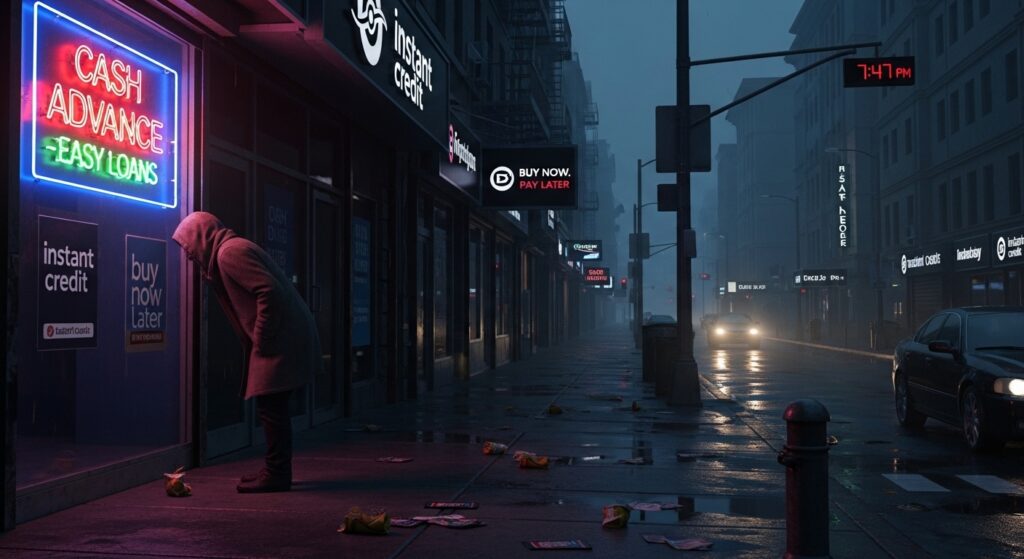
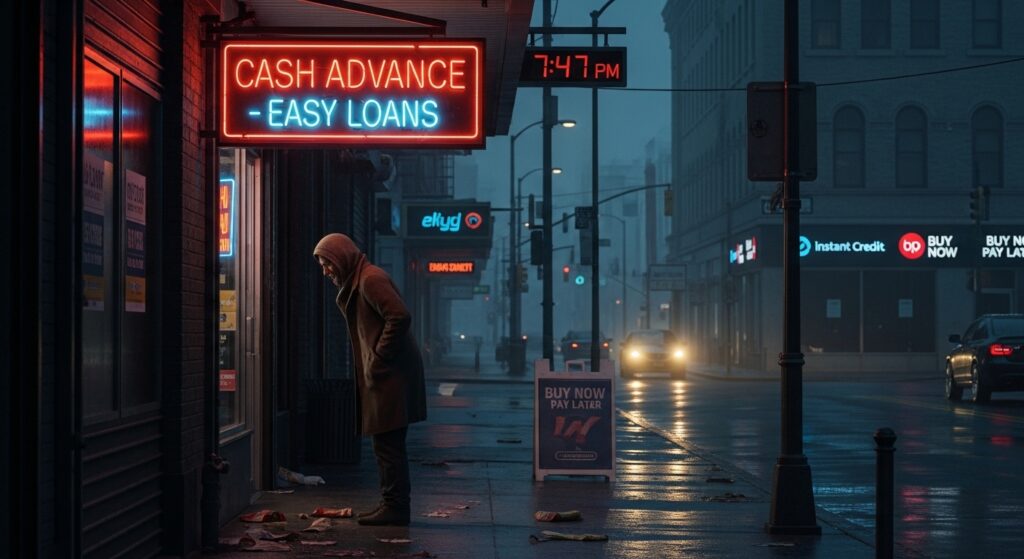
In the early 2000s, predatory lending was easy to spot. It lived in neon-lit storefronts in low-income neighborhoods, offering “cash advances” and “check cashing.” Today, the predatory lender is more likely to be an app on your smartphone with a friendly name and a minimalist design.
The Rebranding of Debt
The biggest shift in 2026 is the rebranding of high-interest debt as “financial wellness” or “convenience.” Lenders have moved away from the term “loan” entirely, using words like “advance,” “access,” or “deferment.” By avoiding the legal definition of a loan, many of these companies also avoid the consumer protection laws that govern traditional lending, such as the Truth in Lending Act (TILA).
The Algorithmic Trap
Modern alternatives use sophisticated algorithms to determine how much you can “borrow.” While this is marketed as a way to prevent over-borrowing, it often does the opposite. These apps track your spending habits, location, and even your social media activity to identify the exact moment you are most vulnerable and likely to accept a high-fee advance.
Earned Wage Access (EWA): The “Payday” That Never Ends
One of the most popular payday loan alternatives in 2026 is Earned Wage Access (EWA). These services allow employees to access a portion of their paycheck before their scheduled payday. While it sounds like a helpful way to cover an unexpected bill, EWA has several hidden dangers.
The “Tip” and Fee Model
Many EWA apps claim to be “interest-free.” Instead, they ask for “tips” or charge “expedited transfer fees.” When you calculate these costs as an Annual Percentage Rate (APR), they often rival or exceed the rates of traditional payday loans. For example, a $5 “tip” on a $100 advance for one week is equivalent to a 260% APR.
The Paycheck Shortfall
The fundamental problem with EWA is that it doesn’t solve a budget deficit; it just moves it. If you take $200 out of your next paycheck today, your next paycheck will be $200 short. This often forces users to take another advance the following month, creating a “digital debt treadmill” that is difficult to escape.
Lack of Regulation
As of early 2026, the regulatory status of EWA remains a battleground. While some states have introduced direct regulations, many EWA providers still operate in a legal gray area, arguing that their products are not “loans” and therefore not subject to usury laws or fee caps.
Buy Now, Pay Later (BNPL): The Silent Credit Killer
“Buy Now, Pay Later” (BNPL) has exploded in popularity, moving from online fashion retailers to everyday essentials like groceries and gas. In 2026, BNPL is often marketed as a “no-interest” alternative to credit cards, but it carries significant risks.
Overconsumption and “Ghost Debt”
BNPL is designed to lower the psychological barrier to spending. By breaking a $400 purchase into four $100 payments, it feels more affordable. This leads to overconsumption, where users find themselves managing dozens of small payments across different platforms. This “ghost debt” is often not reported to credit bureaus, making it invisible to other lenders and even to the users themselves until they miss a payment.
The Late Fee Trap
While BNPL may be interest-free if paid on time, the late fees are substantial. In 2026, many BNPL providers have shifted their revenue models toward these fees. A single missed payment can trigger a fee that is a significant percentage of the original purchase price, and repeated misses can lead to your account being sent to collections, damaging your credit score.
Lack of Consumer Protections
Unlike credit cards, BNPL services often lack robust dispute resolution processes. If you buy a defective product using BNPL, you may still be required to make your payments while you fight with the merchant for a refund.
Digital “Credit Builder” Loans: Paying for Your Own Score
Another emerging trend in 2026 is the “Credit Builder” loan. These are marketed to people with poor or no credit history as a way to “build” their score. However, the reality is often less beneficial than the marketing suggests.
How They Work
In a typical credit builder loan, the lender puts the “loaned” amount into a locked savings account. You make monthly payments (plus interest and fees), and once the loan is “paid off,” you get access to the money. Essentially, you are paying interest to borrow your own money.
The High Cost of a Score
While these loans do report to credit bureaus, the interest rates and administrative fees can be high. In 2026, some “premium” credit builder apps charge monthly subscription fees on top of interest, making the cost of “buying” a better credit score incredibly expensive. If you miss a payment, the very tool meant to help your credit will end up hurting it.
The “Fintech” Mirage: Why Digital Lending Is Often More Dangerous
The rise of financial technology (fintech) in 2026 has brought many benefits, but it has also made predatory lending more efficient and harder to detect.
Data Privacy and “Behavioral” Lending
Digital lenders in 2026 collect an unprecedented amount of data on their users. By analyzing your spending patterns, they can predict when you are most likely to need a loan and target you with “personalized” offers. This behavioral targeting is a sophisticated form of predatory lending that exploits psychological vulnerabilities.
The “Subscription” Trap
Many digital lending apps have moved to a subscription model. For a “small” monthly fee (often $10 to $20), you get access to “interest-free” advances. However, if you only take one $100 advance a month, that $10 fee is equivalent to a 120% APR. These fees are often automatically deducted from your bank account, making them easy to overlook.
Lack of Human Oversight
When you apply for a loan through an app, the decision is made by an algorithm. In 2026, this lack of human oversight means that borrowers who are already in financial distress are often approved for loans they cannot afford to repay. The “frictionless” nature of digital lending makes it too easy to borrow money without fully understanding the consequences.
The Regulatory Landscape in 2026: A Game of Cat and Mouse
As predatory lenders evolve, regulators are struggling to keep up. The legal landscape in 2026 is a complex patchwork of state and federal laws.
The “True Lender” Loophole
One of the most common tactics used by predatory lenders in 2026 is the “true lender” loophole. A non-bank lender (like a fintech app) partners with a bank in a state with no usury laws (like Utah or South Dakota). The non-bank lender then offers high-interest loans nationwide, claiming that the bank is the “true lender” and therefore exempt from other states’ interest rate caps.
The CFPB and the Future of Consumer Protection
The Consumer Financial Protection Bureau (CFPB) has been active in 2026, targeting “junk fees” and predatory lending practices. However, the political landscape and legal challenges have slowed down many of these efforts. Borrowers in 2026 must be their own best advocates, as the law may not always protect them from the most sophisticated predatory products.
Safer Alternatives: How to Break the Cycle
If you find yourself in a financial pinch in 2026, there are safer alternatives to payday loans and their digital cousins.
1. Credit Union Small-Dollar Loans
Many credit unions offer “Payday Alternative Loans” (PALs). These are regulated by the National Credit Union Administration (NCUA) and have capped interest rates and fees. They are designed to help members cover short-term needs without falling into a debt trap.
2. Employer Advances (Non-App Based)
Before turning to an EWA app, talk to your employer. Many companies have formal or informal programs to help employees with unexpected expenses. These are often truly interest-free and don’t involve the high fees of third-party apps.
3. Nonprofit Financial Assistance
There are many nonprofit organizations and community groups that provide emergency financial assistance. These organizations can help with rent, utilities, and other essential expenses, often without requiring repayment.
4. Payment Plans and Negotiation
If you are struggling to pay a bill, contact the creditor directly. Many companies are willing to set up a payment plan or negotiate a lower settlement, especially if you reach out before you miss a payment.
Checklist: How to Spot a Predatory “Alternative” in 2026
Before you sign up for a new lending app or service, use this checklist to ensure it’s not a predatory trap.
- Calculate the APR: Don’t just look at the “fee” or “tip.” Calculate the Annual Percentage Rate (APR) to see the true cost of the loan.
- Read the Fine Print: Look for hidden fees, subscription requirements, and “expedited transfer” costs.
- Check the Regulatory Status: Is the company a licensed lender in your state? Does it use the “true lender” loophole?
- Evaluate the Repayment Terms: Will the loan be automatically deducted from your next paycheck? What happens if you can’t pay on time?
- Look for “Junk Fees”: Are there fees for things like “account maintenance,” “late payments,” or “returned items”?
Conclusion: The Price of “Convenience”
In 2026, the greatest danger of payday loan alternatives is their invisibility. By hiding behind the language of “fintech” and “financial wellness,” these products have managed to bypass many of the protections that were put in place to stop traditional predatory lending.
The “truth” about these alternatives is that they are often just as expensive and just as dangerous as the payday loans they replaced. The price of “convenience” is often a cycle of debt that is even harder to escape because it’s managed through an app on your phone.
As we move through 2026, the best defense against predatory lending is education and skepticism. If a financial product sounds too good to be true—if it promises “instant cash” with “no interest”—it’s likely a trap. By understanding the hidden dangers of these alternatives, you can make better financial decisions and protect your future from the digital debt treadmill.
Deep Dive into the “True Lender” Loophole: A 2026 Perspective {#true-lender-loophole}
One of the most complex and dangerous aspects of predatory lending in 2026 is the “true lender” loophole. This legal maneuver allows non-bank lenders to bypass state interest rate caps by partnering with a bank in a state with no usury laws.
How the Loophole Works
In a typical “true lender” arrangement, a fintech company (the non-bank lender) markets and services the loan, while a partner bank (the “true lender”) technically originates the loan. Because the bank is the “true lender,” it can “export” its home state’s interest rate to any other state in the country. This means a borrower in a state with a 36% interest rate cap could be charged 150% or more on a loan originated by a bank in Utah or South Dakota.
The Impact on Borrowers
The “true lender” loophole has led to a surge in high-interest lending in 2026. Borrowers who think they are protected by their state’s usury laws are often shocked to find themselves on the hook for a loan with an APR that is triple or quadruple the legal limit. This loophole is a major reason why predatory lending remains so profitable in 2026.
The Role of AI in Predatory Lending: A 2026 Warning {#ai-predatory-lending}
Artificial Intelligence (AI) has transformed the lending industry in 2026, but it has also created new opportunities for predatory lenders to exploit vulnerable borrowers.
Algorithmic Bias and Discrimination
AI-driven lending models in 2026 are often biased against low-income and minority borrowers. These models use “alternative” data points, such as your education level, job history, and even your social media activity, to determine your creditworthiness. This can lead to “digital redlining,” where certain groups are systematically charged higher interest rates or denied loans altogether.
Predictive Predatory Lending
Predatory lenders in 2026 use AI to predict when you are most likely to need a loan. By analyzing your spending patterns and location data, they can send you a “personalized” offer for a high-interest advance at the exact moment you are most vulnerable. This predictive predatory lending is a sophisticated form of psychological manipulation that is difficult to resist.
Final Thoughts for 2026 {#final-thoughts-2026}
As we move through 2026, the landscape of predatory lending is more complex and dangerous than ever before. The “hidden dangers” of payday loan alternatives are their invisibility and their ability to bypass the protections that were put in place to stop traditional predatory lending.
By understanding the true cost of these “safer” alternatives and the sophisticated tactics used by digital lenders, you can protect yourself and your future from the digital debt treadmill. Remember, the best defense against predatory lending is education and skepticism. If a financial product sounds too good to be true, it probably is.
Quick Reference: Payday Loan Alternatives Comparison (2026)
| Method | Typical APR | Hidden Dangers | Safer Alternative? |
|---|---|---|---|
| Traditional Payday Loan | 400%+ | Debt cycle, high fees | No |
| Earned Wage Access (EWA) | 100% – 300% | Paycheck shortfall, “tips” | No |
| Buy Now, Pay Later (BNPL) | 0% (if on time) | Overconsumption, late fees | Maybe (if used carefully) |
| Credit Builder Loan | 15% – 30% | High fees, paying for own score | Yes (if low fee) |
| Credit Union PAL | 28% (capped) | None | Yes |
| Employer Advance | 0% | None | Yes |