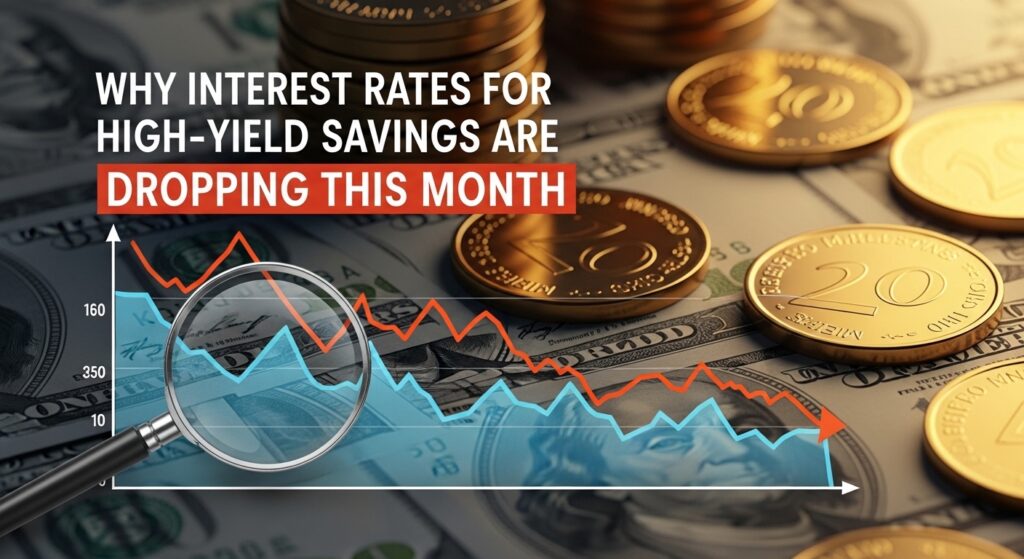
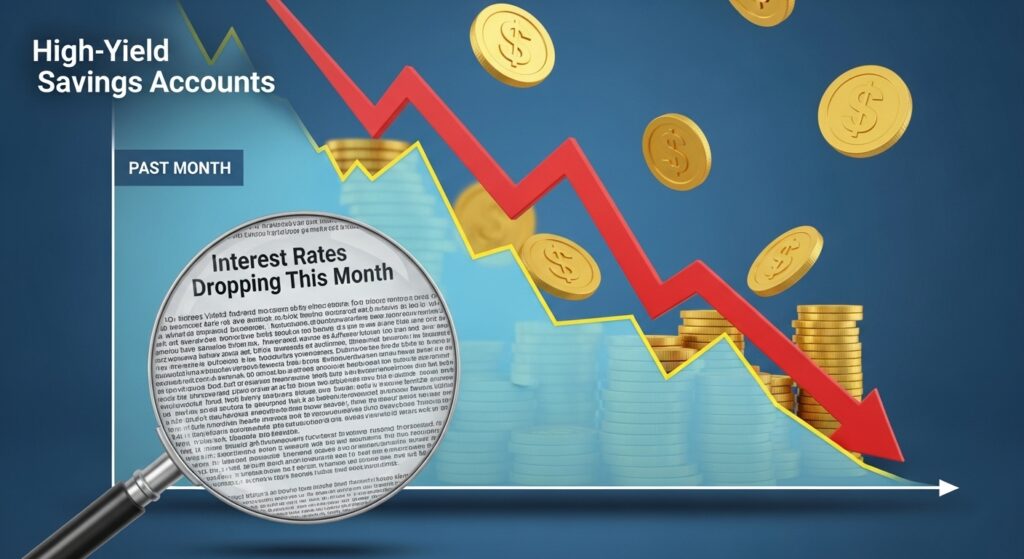
As we move through March 2026, savers are noticing a clear downward trend in the yields of High-Yield Savings Accounts (HYSAs). After a period where 5% APYs were common, the market has shifted, and top rates are now trending closer to 3.5% – 3.75%.
Here is the breakdown of why this is happening right now and what it means for your cash.
1. The Federal Reserve’s “Terminal Rate” Pivot
High-yield savings rates are primarily influenced by the Federal Funds Rate. After holding rates steady at the start of the year, the Federal Reserve has signaled a move toward its “terminal rate”—the level where they believe interest rates are neither stimulative nor restrictive.
- Recent Action: The Fed delivered a 25-basis-point cut in their most recent meeting, pushing the benchmark rate down to a range of 3.25% to 3.5%.
- The Reaction: Banks generally move in lockstep with the Fed. When it becomes cheaper for banks to borrow from each other, they no longer need to pay you a premium to “borrow” your deposits.
2. Inflation is Finally Approaching the 2% Target
The primary reason rates were so high in 2024 and 2025 was to combat rampant inflation. As of the latest March 2026 CPI report, annual inflation has cooled to 2.4%.
- With inflation nearing the Fed’s 2% target, the central bank no longer needs to keep “real” rates (the interest rate minus inflation) excessively high.
- As the “inflation tax” on the economy decreases, the incentive for banks to offer high yields also fades.
3. Increased Competition vs. “Lazy” Money
In 2024, online banks fought a “rate war” to grab market share. In 2026, the strategy has changed.
- Deposit Saturation: Many digital banks have already met their deposit targets. They are now focusing on profitability rather than growth.
- Lagging Rates: Interestingly, while high-yield accounts are dropping, traditional “Big Bank” savings accounts remain stuck at an average of 0.39%. This massive gap means online banks can drop their rates to 3.5% and still look significantly better than a traditional brick-and-mortar bank.
4. Anticipation of a Summer “Pause”
Markets are forward-looking. Banks aren’t just reacting to today’s rates; they are pricing in the June 2026 meeting. Most analysts expect the Fed to deliver one final cut in June before pausing for the rest of the year. Banks are lowering their rates now to get ahead of that curve.
Comparison of Savings Yields (March 2026)
| Account Type | 2024 High | March 2026 Average |
| Top Online HYSA | 5.25% | 3.65% |
| 12-Month CD | 5.50% | 3.40% |
| Traditional Savings | 0.01% | 0.39% |
| Money Market Funds | 5.30% | 3.70% |
How to Protect Your Yield
If you are frustrated by dropping rates, the best move in March 2026 is to Lock in a CD. Unlike a savings account, a Certificate of Deposit (CD) guarantees your rate for the duration of the term. If you believe rates will be even lower by December, locking in a 3.5% 1-year CD today is a smart hedge.